Start with the activity
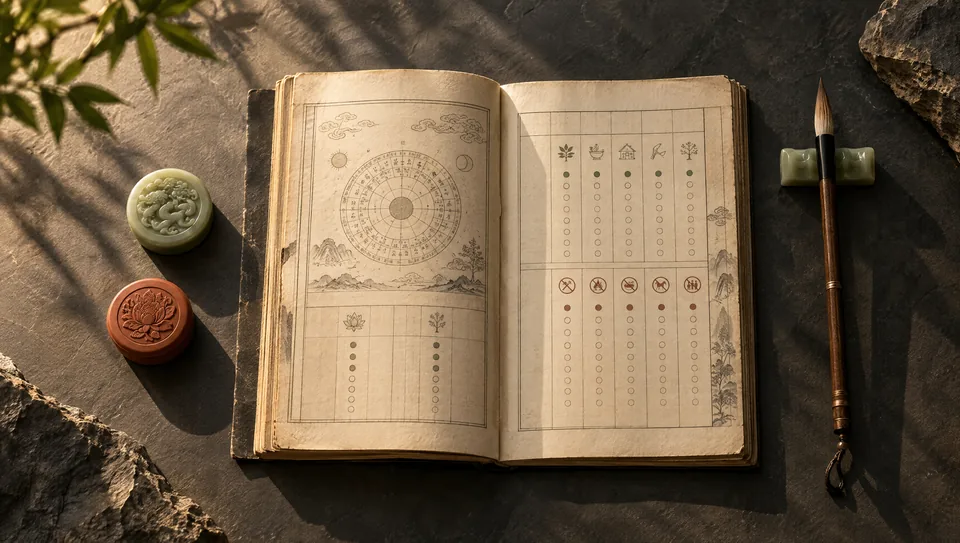
Read the suggested and avoided lists together. The Chinese headings 宜 and 忌 indicate activities recommended or discouraged in that entry. A day might support travel while discouraging marriage. The colour of a calendar cell is a quick overview, not a substitute for those details. An activity missing from both lists is not automatically a special recommendation.
Understand the day officer
The traditional character of the day refers to one of twelve day officers. A name such as Establish or Settle is a category within this system, not a promise of a successful outcome. Read it alongside the specific activities. The explanation cards distinguish the heavenly stem, earthly branch and day officer: they describe different aspects of the entry.
A clashing sign is not a personal verdict
The clash indicates the earthly branch traditionally opposite the branch of the day and its associated animal. It does not mean that something bad will happen to everyone born under that animal. A birth-year animal alone is not a complete personal chart; dates near the year boundary also require attention to the convention used. Treat the label as cultural context rather than a definite forecast.
Use the daily view comfortably
Jump directly to a date using the date finder. Open the day, compare the two activity lists and consult the explanations. On a phone, tap an explanation control. Reveal the Chinese terms when you want to compare them with the translation. The dated page address makes it easy to return to or share that same entry.