Why the labels repeat
The ten heavenly stems and twelve earthly branches advance together in sequence. Their different lengths produce a repeating cycle of sixty pairs. This cycle appears in traditional labels for years, months, days and hours. The stem–branch pair shown for a day is a time designation; it is not a personal birth chart.
Five phases and twelve animals
The stems relate to wood, fire, earth, metal and water, each expressed through yin or yang. The branches are associated with the twelve zodiac animals. Yang Metal and Horse therefore name members of two separate sequences. These terms describe traditional categories, not measurable physical properties of the day.
Both the Moon and the Sun matter
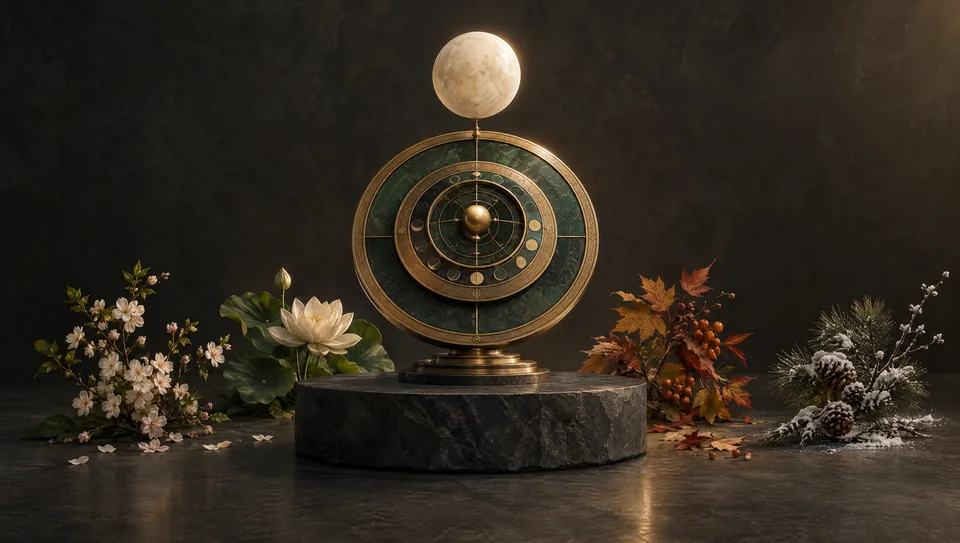
The Chinese calendar is lunisolar, connecting lunar months with the rhythm of the solar year. Its twenty-four solar terms relate to the Sun’s position in the sky. They are not simply alternative names for Gregorian months. The lunar date and a solar-term label are consequently separate pieces of information in the daily view.
Explore the pattern yourself
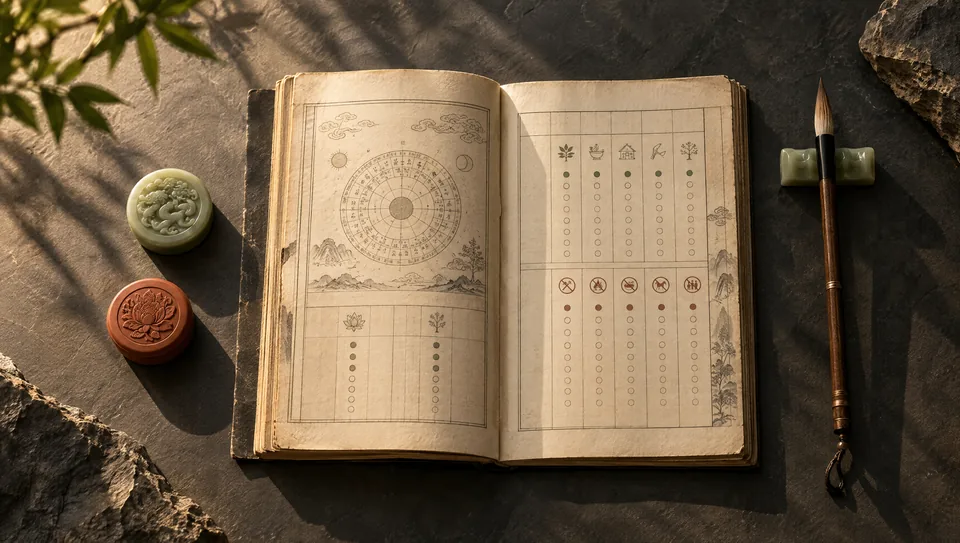
Choose a date and move forward several days to see the stem and branch change. Sixty days later, the same pair can appear with different activity recommendations because its calendar context has changed. It helps to keep the astronomical structure of the calendar distinct from the traditional interpretations attached to it.